Sadeesha Sathsara — Software Developer

Designing clean architectures
built to scale

Software Developer specializing in distributed systems, modern full-stack backends, and DevOps automation. I focus on designing and developing architectural prototypes, clean and robust codebases, and end-to-end applications by applying software patterns across microservices, event-driven pipelines, and CI/CD workflows.

3+
Full-stack systems built and deployed end to end
92%
Queue latency reduction achieved in system optimization
4
Core domains: full-stack, DevOps, AI/ML, backend
Start a project

My
Story

01

Systems Thinking

Designing applications from database layouts to message broker pipelines with clear data boundaries.

02

DevOps & Automation

Believing manual tasks are error-prone. Standardizing testing, builds, and delivery via CI/CD.

Building software with intent, clarity, and solid engineering foundations.

My path in software engineering started at the Sri Lanka Institute of Information Technology (SLIIT). From early academic work, I was drawn to the mechanics of distributed backends—understanding how independent systems communicate, process payloads, and scale efficiently.

A defining chapter in my growth was working as a Software Developer at RnR Solutions. Immersed in their engineering team, I got the opportunity to bridge a heavy Python-based computer vision (OpenCV) engine with a Node.js API gateway. Solving issues like queue blockages via RabbitMQ and configuring Jenkins/GitHub Actions CI/CD pipelines shifted my perspective. I learned that engineering is less about writing massive blocks of code, and more about designing reliable, decoupled architectures and automating the deployment lifecycle.

Today, I continue to build end-to-end full-stack applications and test out modern infrastructure concepts. Whether configuring Dockerized service meshes, optimizing API latencies, or crafting frontend features in Next.js, my goal is always the same: to deliver clean, maintainable systems that serve users effectively.

What I
Do

01Full-Stack Development
ReactNext.jsNode.jsTypeScriptExpressMongoDBMySQLREST APIsTailwind CSS
02Backend & Microservices
RabbitMQEvent-Driven ArchitectureJavaSpring BootPythonDockerAPI Gateway
03DevOps & Infrastructure
GitHub ActionsJenkinsDockerLinuxNginxCI/CDShell ScriptingGit
04AI & Machine Learning
OpenCVFacial RecognitionTensorFlowPython MLComputer VisionModel Integration

Featured
Work

All case studies
AI-Powered Individual Contribution Scoring for Team Software Projects | Final Year Research
Research · deep dives

AI-Powered Individual Contribution Scoring for Team Software Projects | Final Year Research

The Challenge

In team based software projects, every member usually receives the same grade regardless of who actually did the work. Instructors do not have time to manually review hundreds of commits, cross reference Scrum board activity, and judge code quality for every student in every sprint across ten or more teams. As a result, effort goes unmeasured and hard working students are graded the same as free riders.

The Solution

A multi agent AI system that automatically evaluates individual student contribution using only GitHub and Scrum board data, the same data every team already produces. It scores each student across seven factors including effort, consistency, code quality, collaboration, task complexity, behavioral pattern, and code ownership, then combines them into one explainable score backed by a plain language justification and a radar chart. A code based quiz verifies students genuinely understand the code they committed, and a real time prediction layer flags struggling students mid sprint so instructors can step in early instead of only seeing the problem after the sprint ends.

Outcome

An AI system that gives instructors a fair, evidence backed starting point for grading team projects in seconds instead of hours, while flagging at risk students during an active sprint so there is still time to help them before the grade is final.

Technologies Used

AIMachine LearningResearchAgentic SystemsMulti-Agentic Systems
Building an AI Summarized Email Alert Workflow with Gmail, Gemini, and Telegram
Architecture · deep dives

Building an AI Summarized Email Alert Workflow with Gmail, Gemini, and Telegram

The Challenge

Important emails, like the Q3 Client Dashboard update shown in the New Event alert, get missed or read late when they sit in an inbox alongside routine messages. Checking Gmail manually does not scale, and a plain forwarding rule does not help either, since it copies the raw email without surfacing what actually matters in it. The goal for this specific workflow was to catch a new email the moment it arrives, extract the actual substance of it, and push that summary to the channels that get attention immediately, while still keeping a permanent record of what happened.

The Solution

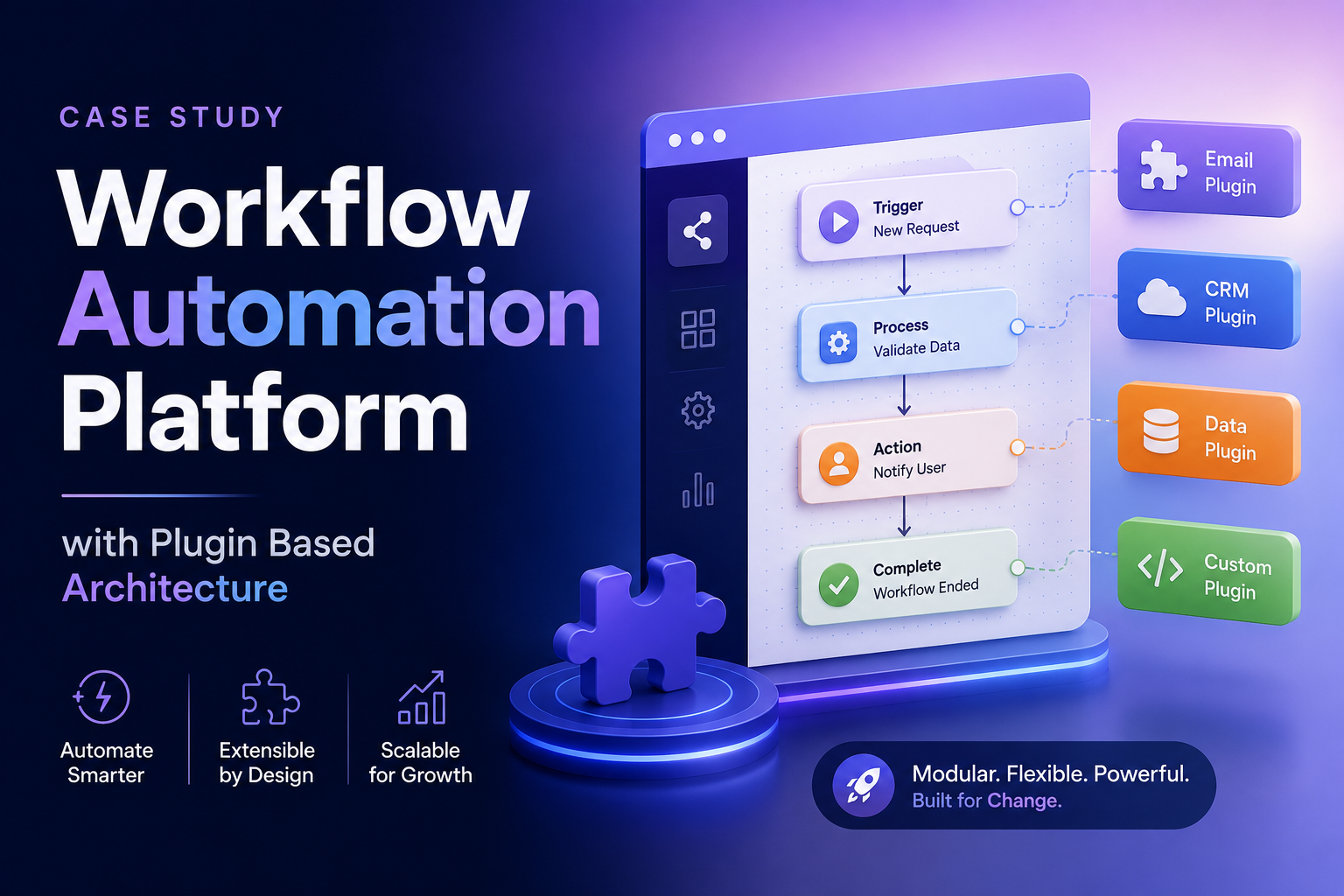
The flow connects four nodes end to end. Gmail Trigger polls for new messages and passes each one into Gemini AI, which generates a summary of the content. From there the flow branches into three parallel actions, Telegram for an instant message alert, Logger Plugin to append the event to a permanent file record, and System Notifier to raise a local desktop alert. All three branches run concurrently off the same Gemini output rather than sequentially, so the Telegram alert does not wait on the file write to finish.

Outcome

Since being built, this flow has executed 57 times with per run tracking, including a visible instance of the New Event alert firing correctly for an incoming email from the Weblab Team about the Q3 Client Dashboard release, complete with a working summary of the critical issues in that email. Out of the recent run history, one run surfaced an error (f40206d5) rather than failing silently, while the surrounding runs completed successfully, which shows the flow is not just running but is being monitored at the level of individual executions.

Experience

2024
— 2025
RnR Solutions
Software Developer
  • Architected and developed a facial recognition platform using a fully decoupled microservice architecture, enabling each service to scale and deploy independently.
  • Reduced API response latency to ~120ms and eliminated queue blockages by 92% by bridging a Python OpenCV model with a Node.js gateway through RabbitMQ event-driven messaging.
  • Engineered dual CI/CD pipelines using GitHub Actions and Jenkins — automating linting, testing, Docker image builds, and automated deployments to Linux servers.
  • Containerised the full service mesh with Docker and orchestrated multi-service environments for staging and development, streamlining deployment workflows.
2022
— Present
SLIIT, Sri Lanka
BSc (Hons) Software Engineering
  • Pursuing a degree in Software Engineering with a focus on system design, data structures, software architecture, and distributed computing.
  • Developed multiple full-stack, machine learning, and enterprise-grade projects — applying real-world architectural patterns to academic and independent work.
  • Active participant in technical communities, collaborative team projects, and open-source contributions.