Nexa Web
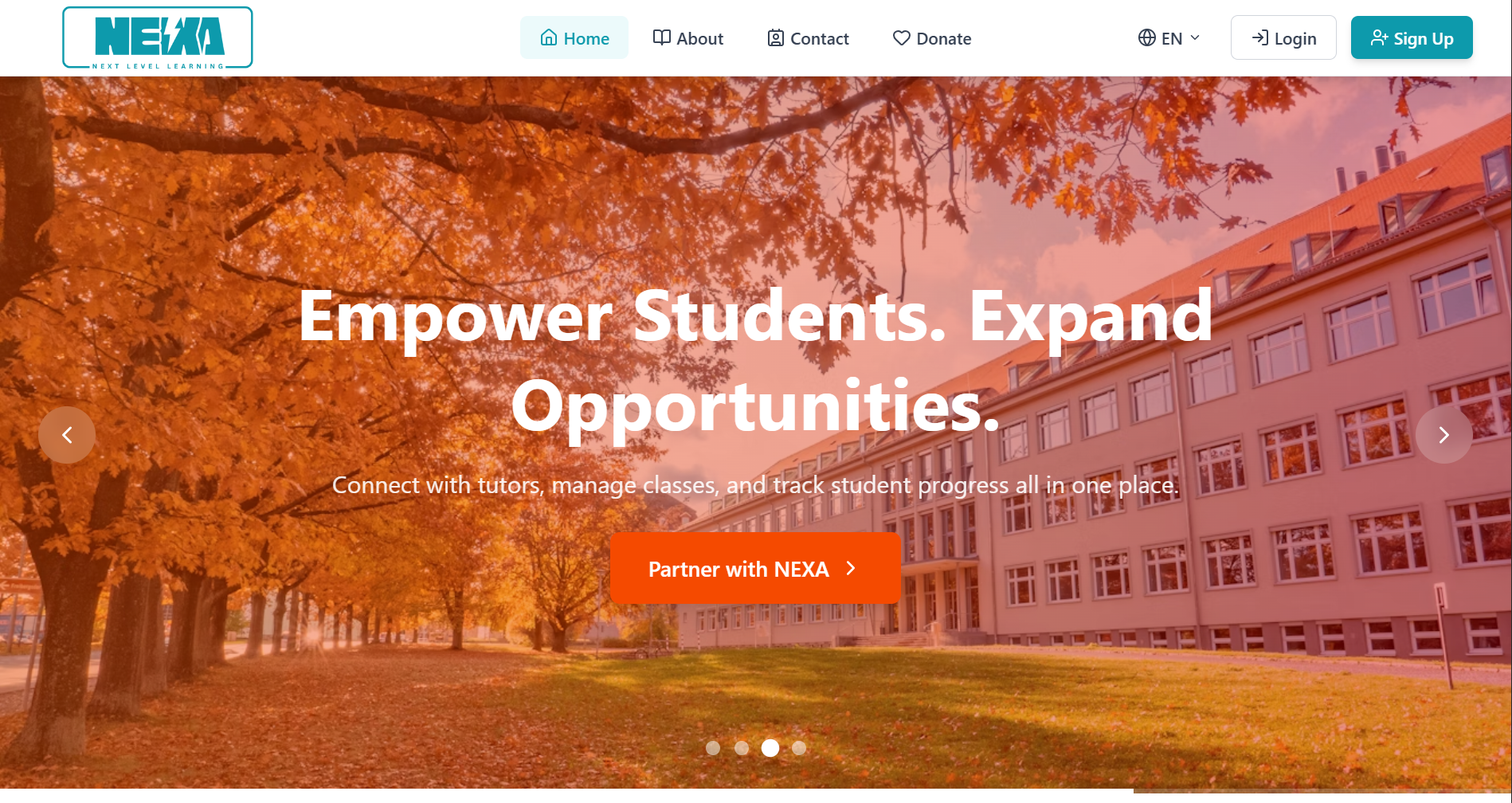
A full stack educational platform that connects students, tutors, institutions, and donors through a role based learning ecosystem, enabling course management, lesson delivery, and community driven education with secure authentication and scalable architecture.
Table of Contents
Nexa – Educational Platform Connecting Students with Tutors
Introduction
Education systems often struggle with accessibility, resource distribution, and personalized learning support, especially for underprivileged communities. Many students lack direct access to quality tutors, structured learning materials, and institutional support, while educators and donors often have no unified platform to contribute effectively.
Nexa was built to solve this gap by creating a centralized educational ecosystem that connects students, tutors, institutions, and donors in a single platform. Instead of functioning as a simple learning management system, Nexa focuses on role-based interaction, where each user type contributes to and benefits from a shared educational network.
The platform is designed as a full stack monorepo application using React and Node.js with Express, supported by MongoDB for scalable and structured data storage.
Role Based Educational Ecosystem
At the core of Nexa is a multi-role system that defines how different users interact with the platform.
Students gain access to structured learning content, course enrollment, and tutor interaction. Tutors contribute by creating and managing courses, uploading lessons, and guiding students. Institutions manage groups of students and oversee academic progress, while donors support educational initiatives and track the impact of their contributions. Administrators maintain platform integrity, user verification, and system-level control.
This role separation ensures that each user interacts with the system in a way that aligns with their purpose, while still contributing to a unified educational environment.
Course and Lesson Management System
Nexa provides a structured course management system where tutors can create courses and organize them into lessons.
Each course acts as a container for structured learning content, including videos, documents, and other educational materials. Lessons are modular units within courses, allowing step-by-step learning progression.
This modular approach improves content organization and makes learning more structured and scalable. It also allows students to track their progress more effectively across different courses.
Authentication and Security Architecture
Security in Nexa is handled through JWT based authentication combined with role-based access control.
Each user is authenticated through secure login mechanisms, with email verification using OTP during registration. Once authenticated, users are granted access based on their assigned role, ensuring that students, tutors, donors, and admins only access relevant features.
This layered security model prevents unauthorized access and maintains data integrity across the platform.
File Upload and Content Delivery System
Nexa includes a file management system that supports uploading and delivering educational content such as videos, documents, and course materials.
Files are associated with specific courses and lessons, ensuring structured content delivery. This system allows tutors to enrich their courses with multimedia resources, improving the overall learning experience for students.
Student Learning Experience
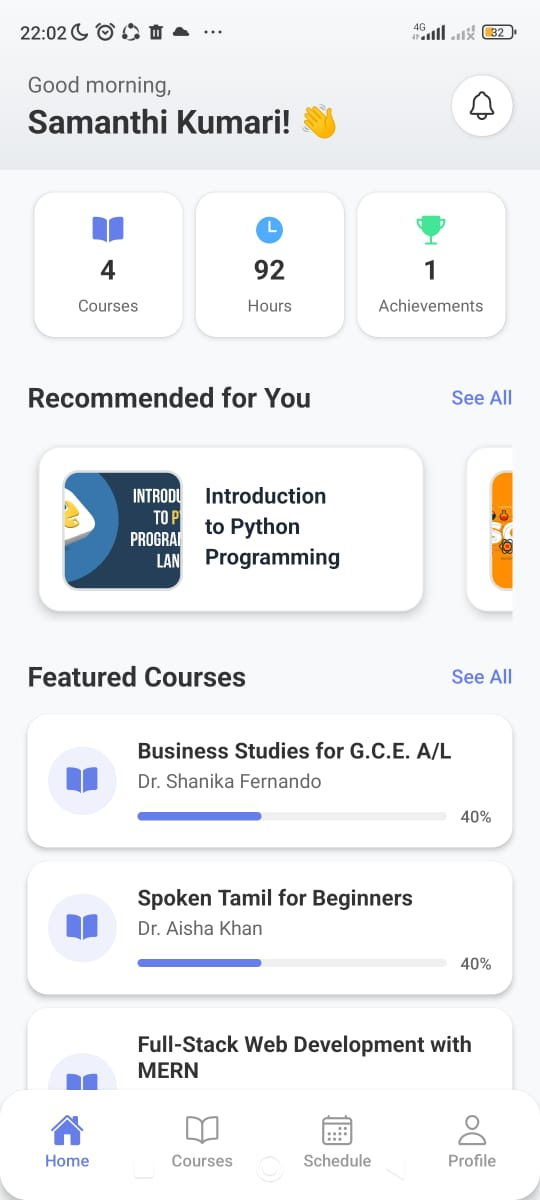
Students can browse available courses, enroll in learning programs, and access lesson materials in a structured sequence.
Progress tracking allows students to monitor their learning journey, while tutor interaction provides additional guidance when needed. The system is designed to support self-paced learning while maintaining structured educational pathways.
Tutor and Content Creation System
Tutors play a central role in Nexa by creating and managing educational content.
They can design courses, upload lessons, and monitor student engagement. The system allows tutors to continuously update content, ensuring that learning materials remain relevant and up to date.
This content-driven model encourages knowledge sharing and collaborative learning.
Institutional and Donor Integration
Institutions can manage multiple students under a unified account, track academic progress, and oversee educational performance.
Donors can contribute to educational initiatives and track how their support impacts students and institutions. This introduces a social responsibility layer into the platform, connecting education with community support.
Admin Control and Platform Management
Administrators manage the entire ecosystem, including user verification, content moderation, and system analytics.
They ensure platform stability, handle role approvals, and monitor system activity. This centralized control helps maintain trust and operational consistency across all user groups.
System Architecture
Nexa is built using a modular full stack architecture.
The frontend is developed using React, enabling a component based structure for reusable UI elements and smooth user interaction. The backend is built with Node.js and Express, handling API logic, authentication, and business rules. MongoDB is used as the database layer, allowing flexible and scalable storage for users, courses, lessons, and interactions.
The system follows MVC and service layer patterns, ensuring separation of concerns between data, logic, and presentation.
State Management and Frontend Design
The frontend uses Redux for centralized state management, ensuring consistent data flow across different user roles and components.
Tailwind CSS is used for styling, enabling responsive and modern UI design. Additional libraries such as React Router, Axios, and Recharts enhance routing, data fetching, and analytics visualization.
This combination ensures a responsive, scalable, and maintainable frontend architecture.
Development Methodology
The project follows a modular and scalable development approach using role-based folder structuring on both frontend and backend.
Each feature is developed independently within its respective role context, allowing parallel development and easier maintenance. This structure also supports future expansion of the platform.
Conclusion
Nexa demonstrates how a role based educational ecosystem can be built using modern full stack technologies. By combining structured course management, secure authentication, and multi-role interaction, the platform creates a scalable solution for bridging educational gaps and enabling community driven learning.
It is not just a learning platform, but a connected system where students, tutors, institutions, and donors collaboratively contribute to education.