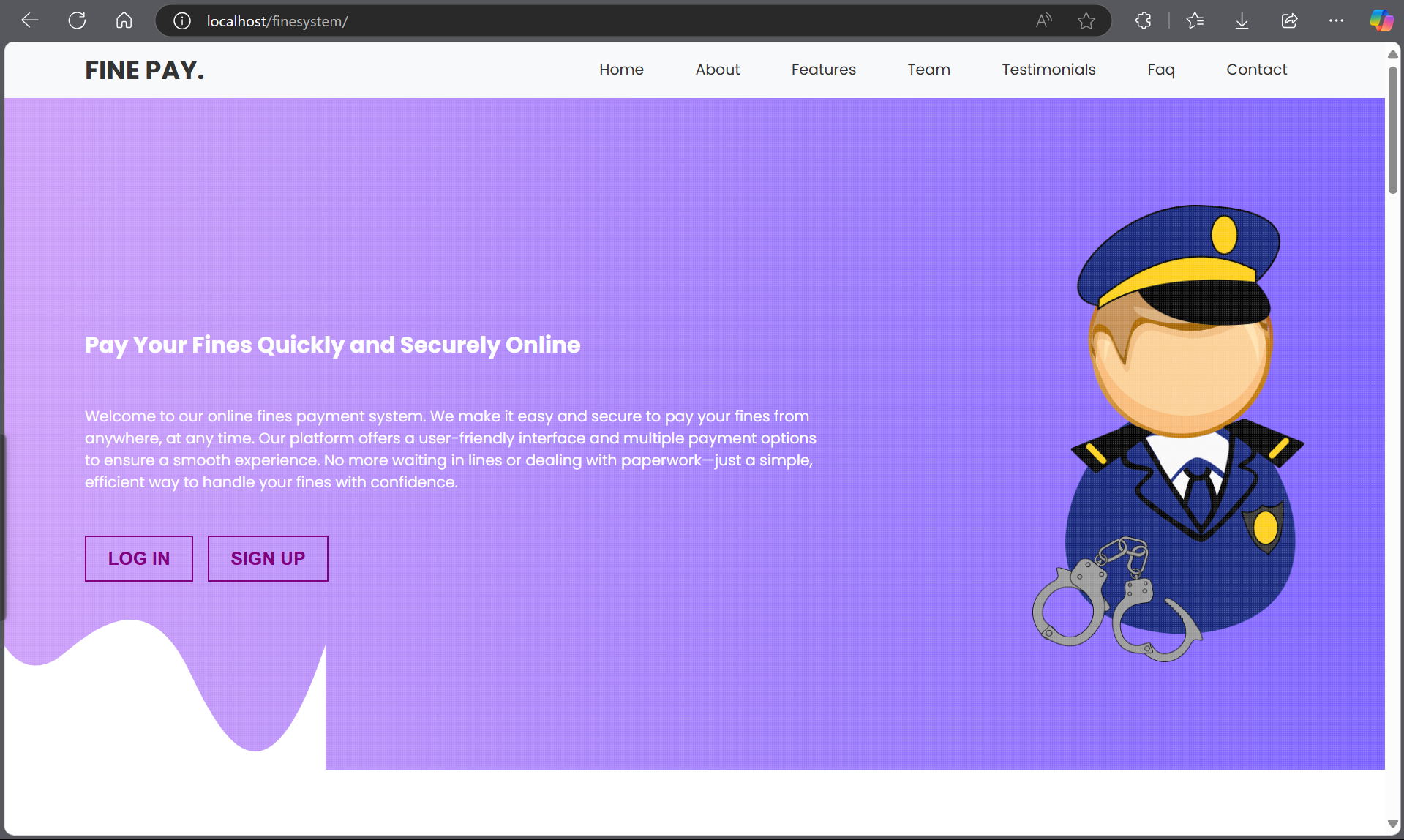
Fine System
A digital traffic violation management platform that streamlines fine issuance, online payments, performance tracking, and operational reporting across drivers, law enforcement officers, and administrators.
Table of Contents
Building a Digital Traffic Fine Management System
Introduction
Traffic violation management is a critical responsibility for law enforcement agencies. In many organizations, issuing fines, processing payments, managing officers, and generating reports are often handled using multiple disconnected systems or manual processes. These approaches can lead to delayed payments, inconsistent record keeping, limited visibility into officer performance, and increased administrative overhead.
The Fine System was developed to modernize these operations by providing a centralized platform for managing the complete lifecycle of traffic violations. The application offers dedicated portals for drivers, police officers, and administrators, ensuring that every stakeholder has access to the tools and information relevant to their role. By digitizing fine management, the system improves operational efficiency, enhances transparency, and simplifies interactions between citizens and law enforcement authorities.
The application follows a traditional three tier web architecture, separating the presentation layer, business logic, and data layer to create a maintainable and scalable solution.
Driver Portal
The driver portal was designed to provide a convenient and transparent way for drivers to manage their traffic violations without requiring physical visits to government offices.
Drivers can securely log into the platform to view issued penalties, review outstanding fines, and complete payments through saved payment methods. The system also maintains a complete payment history, allowing users to track previously settled fines and review detailed penalty information whenever required.
In addition to financial transactions, drivers have access to their driving license information and personal statistics, including the total number of penalties issued, paid penalties, and outstanding fines. Presenting this information within a single dashboard gives users a clear overview of their driving record and encourages timely payment of violations.
Police Officer Portal
Police officers require fast and reliable tools for issuing penalties while maintaining visibility into their daily responsibilities.
The officer dashboard provides an overview of daily performance targets, the number of penalties issued throughout the day, and weekly statistics presented through graphical charts. These visual insights help officers monitor their productivity while enabling departments to measure operational performance.
When issuing a traffic violation, officers can quickly record penalty information directly through the system, eliminating paperwork and reducing processing time. Recently issued penalties are immediately available for review, allowing officers to verify issued fines and maintain accurate records.
The platform also supports report generation, enabling officers to produce downloadable daily activity reports, monthly fine summaries, and traffic violation trend reports for operational analysis.
Administrative Portal
The administrative portal serves as the central management interface for the entire system.
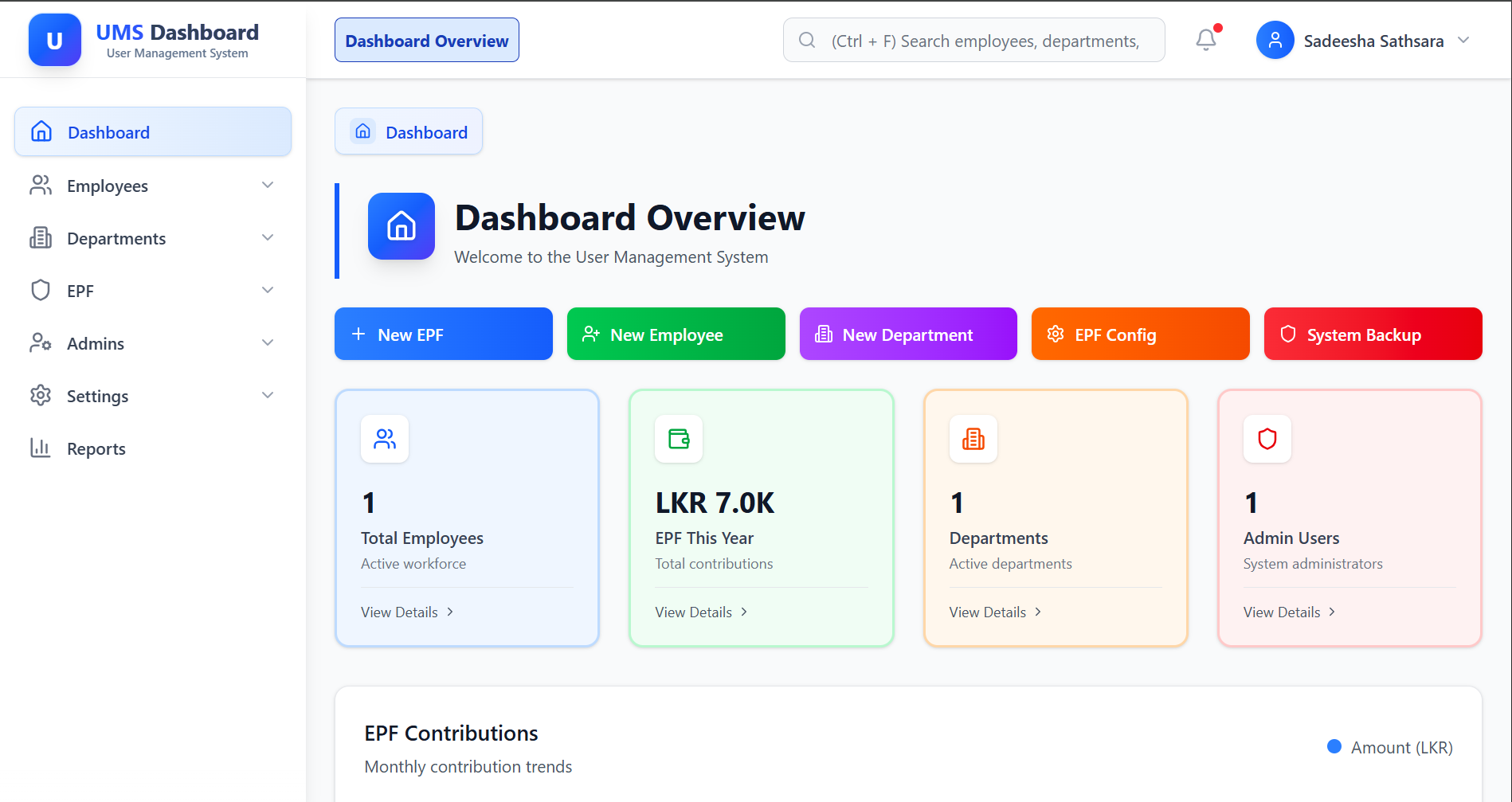
Administrators can monitor traffic violations across the organization through summary dashboards that display previous day statistics and average daily violation counts. These insights help decision makers evaluate enforcement activities and identify operational trends.
The system also allows administrators to assign daily performance targets to police officers, helping departments measure productivity and monitor field operations. Notifications can be distributed to both drivers and officers directly through the platform, improving communication without relying on external channels.
User management features enable administrators to create police officer accounts, manage user profiles, and maintain accurate personnel records. In addition, the platform provides fine management capabilities, allowing administrators to define traffic violations, configure penalty amounts, and update fine categories as regulations evolve.
Comprehensive reporting tools generate organization wide summaries, departmental statistics, and date range reports, providing valuable information for operational planning and decision making.
Reporting and Analytics
One of the primary objectives of the Fine System is to transform raw operational data into meaningful insights.
The application generates multiple reports for different user roles, allowing officers and administrators to analyze traffic violation trends, monitor enforcement activities, evaluate departmental performance, and review financial information related to fines. Graphical dashboards further improve decision making by presenting key metrics in an intuitive and accessible format.
Security and Role Based Access
Since different user groups interact with different parts of the application, the system implements role based authentication and authorization.
Drivers only have access to their own penalties and payment information. Police officers can issue violations and generate operational reports without accessing administrative functions. Administrators are granted complete control over users, officers, fine configurations, notifications, and reporting.
This separation of responsibilities improves security while ensuring that each user only interacts with the functionality required for their role.
Technology Stack
Frontend
The user interface was developed using HTML, CSS, and JavaScript to create responsive dashboards and interactive user experiences.
HTML provides the structural foundation of the application, CSS delivers a consistent and responsive interface across different devices, while JavaScript enhances usability through client side validation, dynamic content updates, charts, and interactive dashboard components.
Backend
The application was developed using PHP for implementing the business logic and handling communication between the client interface and the database.
PHP processes user authentication, manages role based access, validates traffic violation records, processes fine payments, generates reports, and coordinates all server side operations. Its seamless integration with relational databases makes it well suited for transaction driven applications such as traffic management systems.
Database
The system uses MySQL as its relational database management system.
All application data including users, police officers, traffic violations, payment records, notifications, and reports are stored within a structured relational database. MySQL was selected for its reliability, efficient query performance, data integrity, and strong integration with PHP, making it an ideal choice for managing large volumes of transactional data.
Conclusion
The Fine System demonstrates how digital technologies can modernize traffic violation management by replacing fragmented manual workflows with a centralized web platform. Through dedicated portals for drivers, police officers, and administrators, the application streamlines fine issuance, online payments, operational reporting, and organizational oversight.
Beyond improving efficiency, the project highlights the importance of role based system design, centralized data management, and reporting driven decision making in developing enterprise scale government and public sector applications.