From Monolith to Event-Driven Microservices: An Architectural Blueprint
A comprehensive case study on refactoring legacy, tightly coupled monolith architectures into decentralized, highly performant microservice ecosystems using Node.js, Spring Boot, and RabbitMQ.
Table of Contents
From Monolith to Event-Driven Microservices: An Architectural Blueprint
How replacing synchronous REST chains with an asynchronous event grid turned a fragile checkout flow into a system that survives its own failures.
The Challenge: Dealing with Tight Coupling
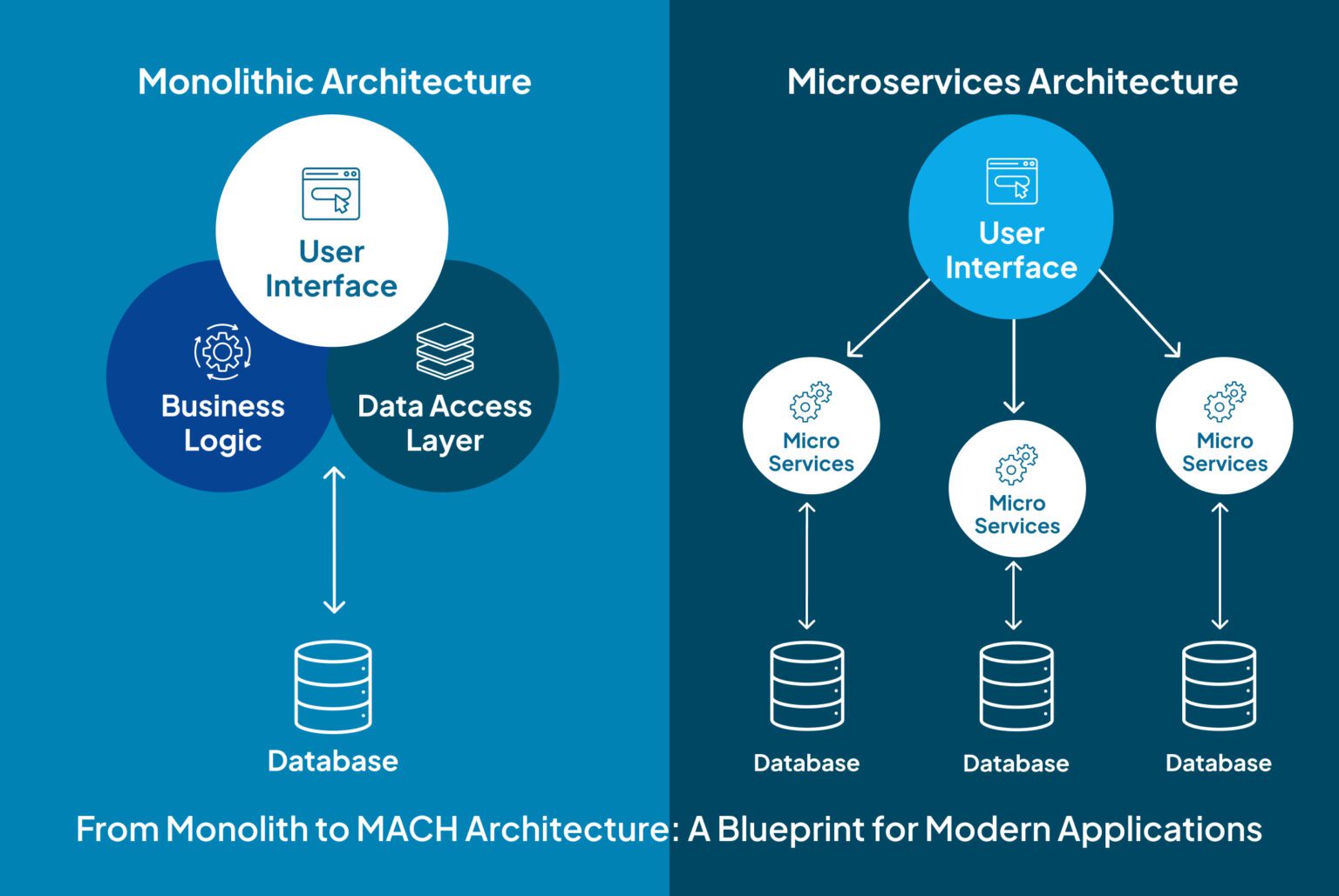
Many growing software ecosystems eventually face the limitations of monolithic design, or its close cousin: a set of "microservices" that are technically separate deployments but still talk to each other synchronously, as if they were one big program split across network calls.
When Sathsara stepped in to optimize this system, individual services were bound directly via synchronous REST APIs. Checkout called inventory. Inventory called the reporting engine. Every step in the chain waited on the one before it, over HTTP, in real time.
This looked fine on a whiteboard. In production, it meant one thing: a failure anywhere in the chain became a failure everywhere in the chain. A failure in the reporting engine bubbled up and crashed the checkout transaction flow, causing socket exhaustion and request queue blockages, even though reporting had nothing to do with whether a customer's payment should succeed.
Why Synchronous REST Failed at Scale
The common thread across all three problems is the same: every synchronous call is a promise that the other side will respond, right now, correctly, every time. At small scale, that promise mostly holds. At scale, something is always slow, restarting, or down, and synchronous chains have no way to absorb that.
The Solution: Designing the Event Grid
Sathsara decoupled the orchestration logic using RabbitMQ as the central event broker, creating an asynchronous publish-subscribe pattern. The core idea is a shift in what a service is even allowed to know about the ones around it.
In the old model, checkout had to know that inventory existed, know its URL, know how to call it, and wait for it to answer. In the new model, checkout does one thing: it announces that "an order was created." It doesn't know or care who is listening, how many services react to that event, or how long they take to finish reacting. That announcement is the event, and RabbitMQ is the grid that carries it.
// Publishing message to checkout exchange
const publishOrderEvent = async (orderData) => {
  const channel = await getRabbitMQChannel();
  const queue = 'order.created';

  await channel.assertQueue(queue, { durable: true });
  channel.sendToQueue(queue, Buffer.from(JSON.stringify(orderData)), {
    persistent: true
  });
  console.log("Order event published:", orderData.id);
};
Two details in this snippet matter more than they look like they should:
By placing RabbitMQ in between, the transaction flow returns immediately with a "Pending" state while backend microservices process inventory validation and ledger updates in the background. The customer sees a fast, confident response. The actual business logic, the parts that used to block the whole chain, now happen off to the side, at their own pace, without anyone waiting on them.
From One Straight Line to Many Independent Listeners
The shape of the system changes as much as its behavior. A synchronous chain looks like this:
Checkout → Inventory → Ledger → Reporting
   (each step waits for the one before it to finish)
One slow or broken link, and everything behind it in the chain stalls too.
The event-driven version looks like this instead:
Checkout → publishes "order.created" → RabbitMQ
                                          │
                 ┌────────────────────────┼─────────────────────────┐
                 ▼                        ▼                         ▼
          Inventory Worker           Ledger Worker            Reporting Worker
        (validates stock)          (records transaction)     (updates dashboards)
Checkout publishes once and moves on. Inventory, ledger, and reporting each consume that same event independently, on their own schedule, in their own process. None of them block checkout, and none of them block each other. If reporting is down for maintenance, checkout has no idea, because it was never waiting on reporting to begin with.
Architectural Outcomes
What This Pattern Actually Trades Away
An event-driven architecture isn't free, and it's worth being honest about the trade-offs rather than presenting this as a strictly better option in every situation:
1. Eventual consistency, not immediate consistency. The moment checkout returns "Pending," inventory hasn't been validated yet. If a customer manages to order the last unit of something twice in the same second, the system needs a plan for that (a compensating "insufficient stock, order cancelled" event), because the check happens after the fact, not before.
2. Debugging gets less linear. A single stack trace no longer shows you the whole story. Tracing what happened to one order across checkout, inventory, ledger, and reporting means correlating logs across services, usually with a shared order ID or a distributed tracing tool.
3. Idempotency becomes mandatory, not optional. RabbitMQ can redeliver a message after a crash or a dropped acknowledgment. Every consumer needs to handle "I might see this exact event twice" gracefully, or a retried message can double-charge a ledger or double-decrement stock.
4. You now operate a message broker. RabbitMQ itself needs monitoring, capacity planning, and an upgrade path. Decoupling your services doesn't remove operational complexity, it relocates some of it into the broker.
None of these are reasons to avoid the pattern. They're reasons to design for them from the start, the same way the original synchronous system should have been designed with timeouts and circuit breakers from the start, and wasn't.
The Core Lesson
The real shift here isn't "REST is bad, queues are good." It's a change in what a service is responsible for. A synchronous call makes a service responsible for another service's uptime, latency, and correctness, all in the middle of handling its own request. An event makes a service responsible only for announcing what happened. Everyone downstream decides for themselves how, and when, to react.
That single change, from "wait for an answer" to "announce a fact," is what turns a chain of fragile dependencies into a system where one slow or broken piece stays exactly that: one slow or broken piece, not the whole platform.